Shadows, Boundaries & Being Human
Adam Blvck, 2025-04-14
Hey there, my name is Adam Black, and today I want to talk about something juicy, something foundational—something I believe the entire surface of the earth desperately needs but often misses: accepting our shadows.
Now, when I say shadows, what am I actually talking about? Let's dive into that.
Imagine a cat. A cat is (mostly) fully itself, right? It’s out there scavenging for food, looking cute to get fed, or annoying you with its incessant meowing. Fundamentally, a cat is this boundary-exploring machine, pushing to see where it can climb, where it can squeeze into, where food might be hidden. Why does it do this? Because a cat doesn't operate within a monetary system or a social structure. It simply explores boundaries—that’s what it's built for.
Now, we humans are kind of similar. Deep down, to be human means to be constantly testing and exploring boundaries. Can I say this? Can I do that? Can I make this much money? Could I become a dictator? Could I start a war? Could I love this deeply? Could I be hurt? Could I hurt others? All of these explorations define our humanity.
But here's the thing: whenever two boundaries meet—say, two people—something mysterious happens. These meeting points are where shadows emerge. You see, when another human being stands in front of me, I merely see photons scattering across the surface of their skin. On the most superficial level, that's all we really see—a boundary defined by light bouncing off a person.
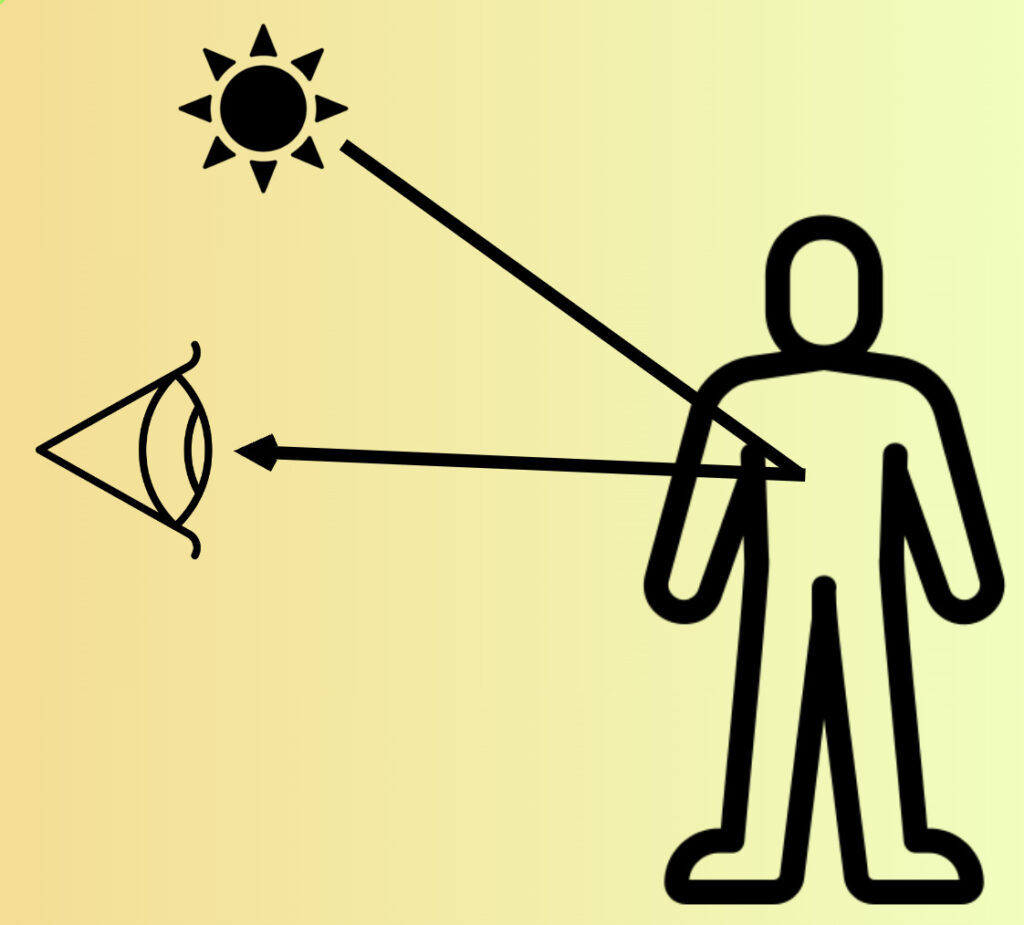
But beneath this superficial layer lies engagement, interaction, life itself—filled with mystery and unknowns. The shadow, my shadow, your shadow, emerges precisely because our boundaries have begun to interact. When I choose to interact with you, to ask you a question, to invite you into a project, or even something intimate, like a relationship, or yes, even sex—though that might feel a bit intense—this act of boundary-testing reveals hidden depths and shadows. It is through engagement, perturbation, and exploration of each other's boundaries that shadows become vividly apparent, dynamic, and active.
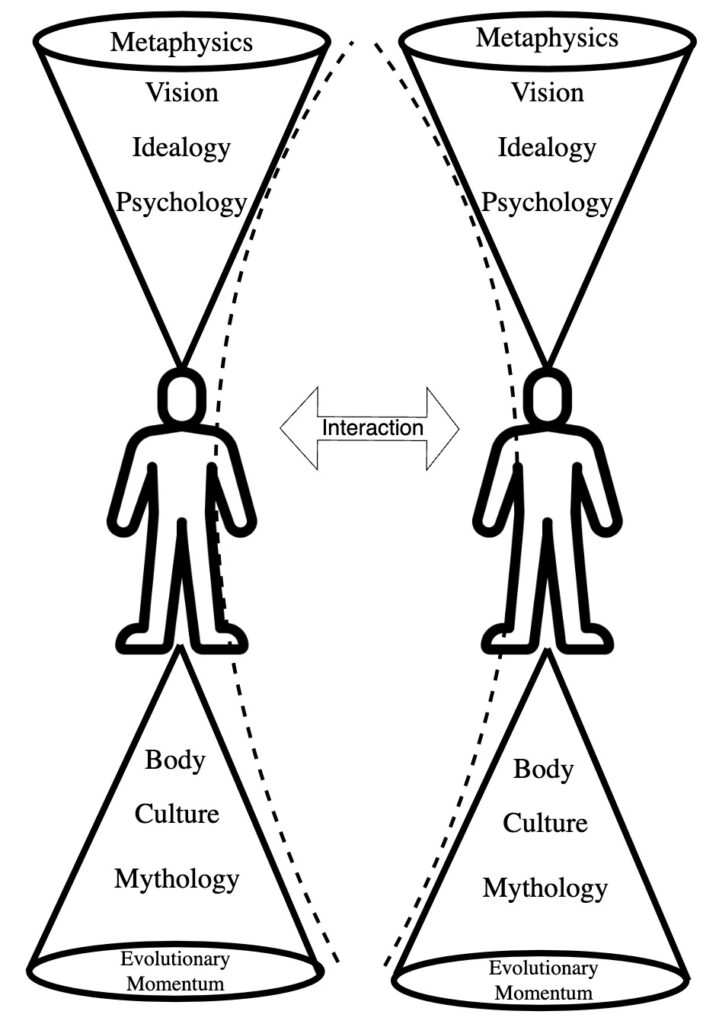
In the exploration of each other's boundaries, the presence of shadows become vividly apparent.
Take a business interaction as an example. You meet someone new, and you’re sizing each other up. On the surface, there’s dialogue, there’s cooperation. But beneath? Shadows. "What if this person betrays me? What if they're dishonest?" And suddenly, you're navigating in the dark, protective of your own shadow, wary of theirs.
Here’s where it gets tricky, yet incredibly essential: the only viable solution isn't to "fix" humanity or the million-year-old DNA machine that we call ourselves. The real solution is to become more human—to fully accept our shadows. It's not about correcting or eliminating pride, doubt, or jealousy, but rather embracing these shadows, integrating them, and redirecting their energy into something greater than ourselves. Many years of contemplation on the Gene Keys has taught me this (oh btw, I created the new dynamic profiler, go check it out!).
Consider the dictator. You can't simply tell a dictator he's wrong—that’s a quick way to lose your head. Instead, the dictator must become even more himself, pushed by life’s circumstances into understanding. Perhaps it’s the feminine way, a subtler approach, that might guide him—a personal loss, a profound experience that shifts his reality. In this way, shadows transform, not by suppression, but by acceptance and deep understanding.
Morality, then, isn't about enforcing rules; morality is the philosophy of boundary dynamics. How do we engage with one another’s boundaries? What happens when shadows collide? Each stratum of society—dictators, billionaires, farmers, the middle class—operates with distinct boundary dynamics, distinct moralities. Yet all of us exist within a single colossal boundary dynamic system called society. Our task? To develop a notation, a habitual way of discerning emotions, thoughts, facts, and desires clearly—without censorship or oppressive judgment. Sadly, we're not there yet. The existence of "misinformation" and "Flat Earthers" is but obvious indications of our limitations in the use of language.
Morality is the philosophy of boundary dynamics
Freedom of speech becomes critical here because if we cannot express openly—even unpleasant things—we cannot truly understand our shadows or the shadows of others. Oppressed and misunderstood shadows are most likely the main culprit of all suffering on the surface of planet Earth.
A racist, for example, expresses bewildering distrust of people, superficially identified, but fundamentally implied. It's a typical shadow born from past hurt or misunderstanding. Allowing space for this expression, clearly labeled and contextualized as personal emotion rather than objective fact, like in therapy, or a secure and loving relationship, might indeed be the only vital path toward deep healing of these core wounds.
I'm personally working on a project called QQuill (SpellBook is the current name) - an attempt to construct a formalization of this more universal notation of clarity with oneself, to help humanity integrate shadows more effectively. But that's another story for another time—I wanted to tease it just a bit.
In Conclusion
To be human is to explore boundaries. When boundaries meet, we confront shadows—ours and theirs. The way forward isn't by suppressing these shadows, but by accepting, understanding, and navigating them consciously. Ultimately, morality, freedom of speech, and societal harmony all hinge on our willingness to accept and embrace the shadowy, mysterious aspects of our humanity.
Will we be able to engage with this notion and concept on time, or would we rather start wars, and fight it out on the streets?
Either way, thanks for being here today.